Cars have no place in cities, especially when they carry only one passenger. According to an infographic by the government, the average occupancy rate of a car for daily commutes is 1.43 passengers (Source).
Yet cars take up a lot of space. A huge amount of space. They require public parking spots that take up space meant for sidewalks, trees, and bike lanes, while also clogging streets and slowing down emergency vehicles, service vehicles, and public transport. And I’m not even mentioning the fine particle pollution!
While cars allow direct travel from point A to point B without transfers or walking, they are no faster than a tram or subway—and not even faster than a bus if it has priority at traffic lights and a dedicated lane.
On the other hand, they are terribly inefficient in terms of space occupied per passenger transported. Here’s an image I found on Reddit, which compares the space required for the same group of people depending on the chosen mode of transport:
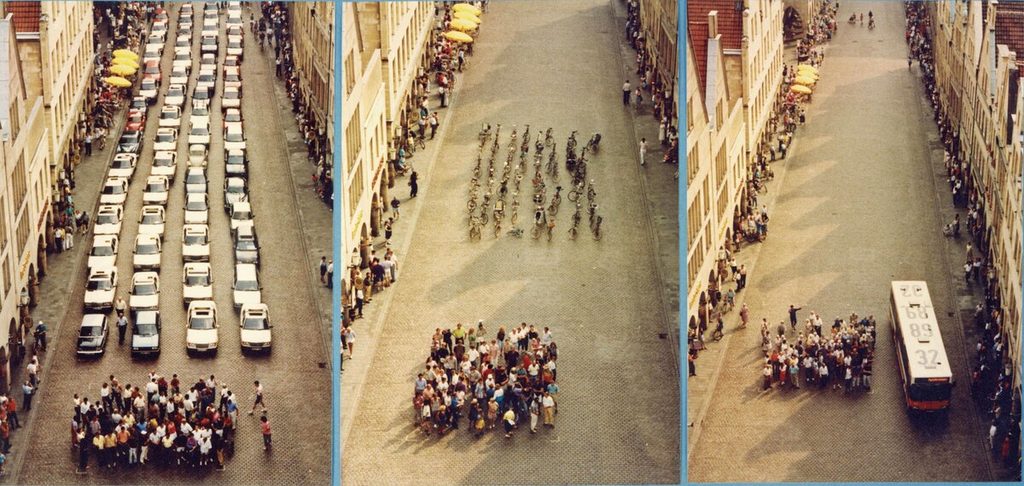
The result is clear: the personal car is the worst solution. To transport a person weighing roughly 60 to 100 kg, it is necessary to move several tons of metal, glass, and plastic. Bikes and coaches take up less space and leave the road free for service and utility vehicles.
The key in a densely populated city where everyone should be able to move freely and easily is shared mobility. This means identifying the most heavily used routes and implementing an efficient transport system.
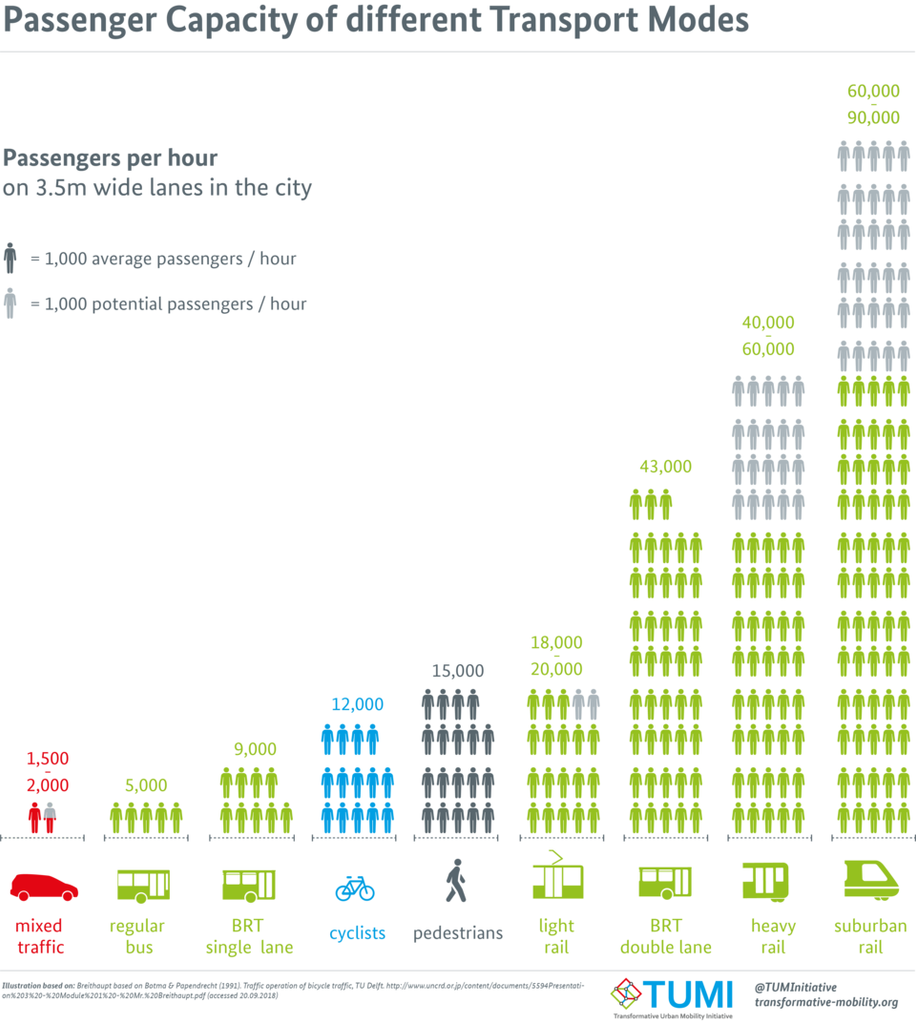
The solution to a congested road is not adding a lane but changing the mode of transport. On the same road, removing a traffic lane would reduce its capacity by about 1,500–2,000 passengers per hour, but replacing it with a dedicated bus line would increase it tenfold!
Here’s a poster I photographed at the Stockholm Transport Museum during my trip to Sweden, which states that an 8-car metro train can carry as many passengers as 300 cars.
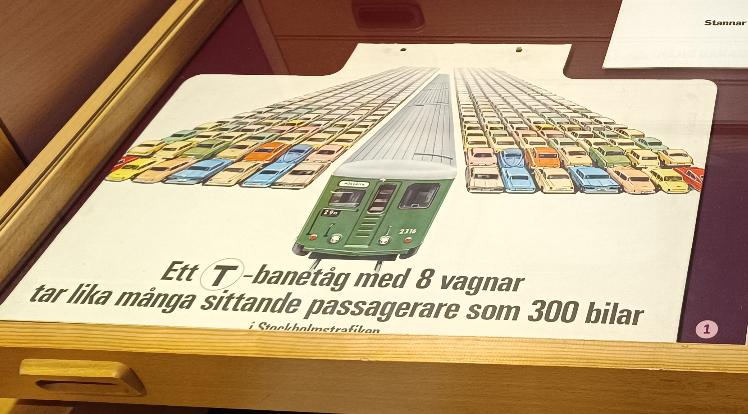
From a mass transit perspective, as in Stockholm, while a metro line is a major investment, it is actually a viable long-term solution because it truly helps decongest streets.


Post a comment